
Legal epidemiology is the study of law as a factor in the cause, distribution, and prevention of disease and injury, helping us understand how laws and policies work, and whether they are having the effects intended.1 The goal of community-centered legal epi is to think strategically and creatively about how to engage those most impacted by the issue you aim to address at each stage of the legal epi process. The questions below aim to help you clarify your vision, make sure you understand the community context, and identify who should be engaged.
- What is the change that you want to see as the leaders of this project? What do your partners/the community want to see? Is there alignment?
- If there is alignment, what is it that the community wants to see? If there is not alignment, how do you find common ground to move forward on the issue?
- What words, images, or concepts come to mind?
- What does your organization want to see as an outcome?
- Which groups see this issue as a priority? What solutions are they advocating for?
- Has this issue been addressed before in your community or others? What can we learn from those examples?
Laws can have many sources, structures, and jurisdictions that can affect your issue. It is important to consider all these aspects of law as you begin to narrow potential solutions.
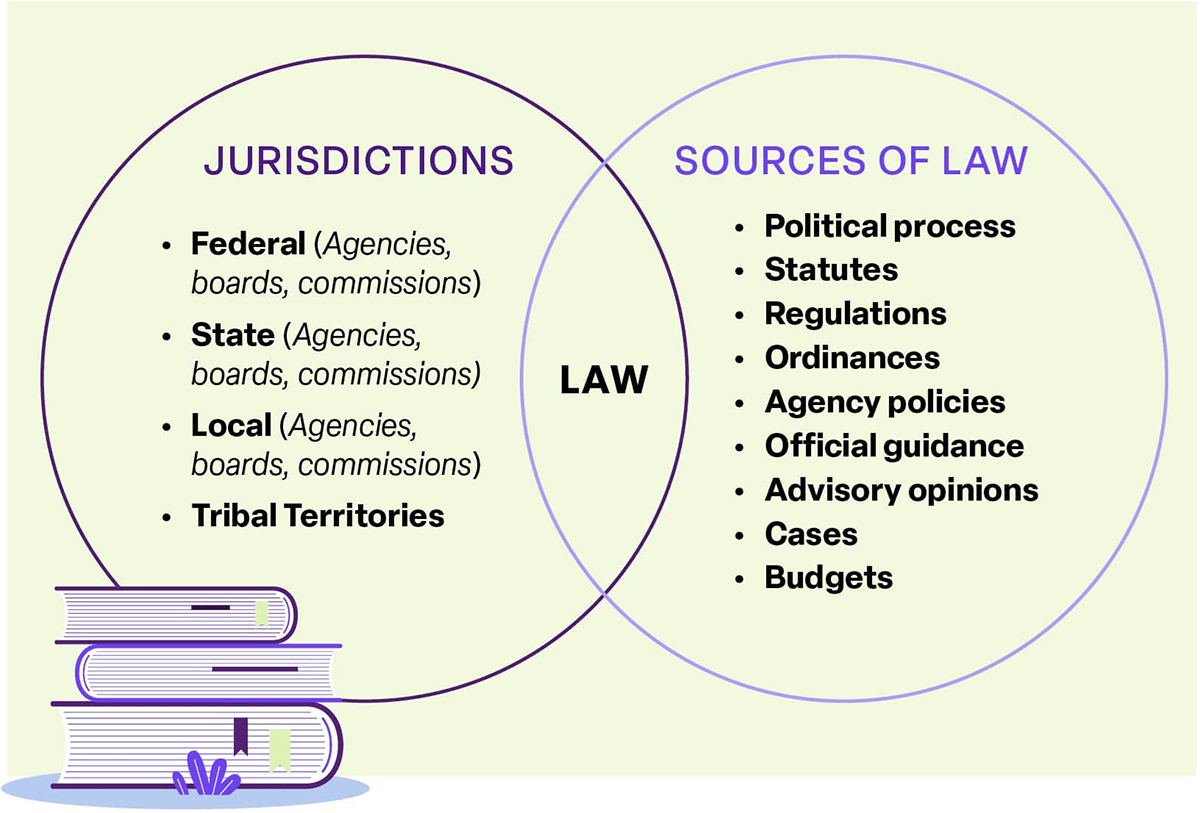
- What laws, policies, practices or norms support or prevent the change you want to see happen?
- Which do you want to focus on?
- See relevant resources and tools for additional guidance on the Resources page.
Note: For purposes of this document, “partners” can be defined however your team or organization feels is appropriate. List the partners you want to engage using the following questions as a guide:
- Who is most impacted by the issue you are trying to address and how?
- Whose voices are often missing but should be included? How do you know?
- What support or opposition do you anticipate?
- How do you and your organization see yourself in relation to the problem or the solution?
See relevant resources and tools for additional guidance on the Resources page.
- By pursuing this change, what is your vision for your community? What are you committing to?
- How will the voices you identified in step 4 guide the way you define and carry out this vision?
- See relevant resources and tools for additional guidance on the Resources page.
Together, these steps will help you create a clear starting point to understand the change you want to see, the laws in play, and the ways that communities and power dynamics can influence your path forward. With this foundation, use the next section to help ground your work in community engagement strategies that will improve the legal epidemiology process to ultimately promote community health and wellbeing.
1 Temple University Center for Public Health Law Research. (https://phlr.temple.edu/defining-legal-epidemiology)
